
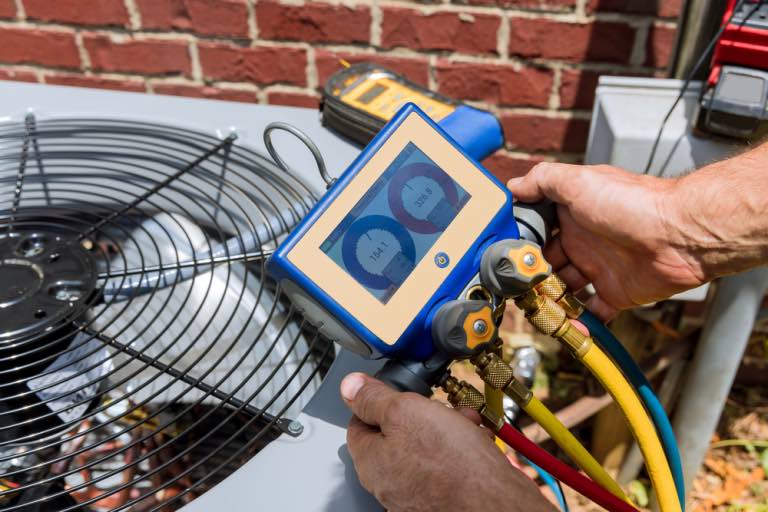
Did you know that the global market size for HVAC systems is expected to reach $231.11 billion by 2027?
HVAC systems, or heating, ventilation, and air conditioning systems, have become essential components of buildings and homes all over the world. They are responsible for maintaining comfortable indoor temperatures and ensuring proper air quality.
A crucial component of these systems is the HVAC vacuum pump. It handles removing air and moisture from the refrigerant lines. This ensures proper cooling and heating performance.
This article will explore the different types of HVAC vacuum pumps and their uses to help you understand how they contribute to the overall performance of HVAC systems. Let’s get started!
Single-stage Rotary Vane Pump
This type of vacuum pump uses a single vane mounted on a rotor that rotates inside a cavity. As the rotor spins, it creates centrifugal force, which pushes the air out through an exhaust valve.
This vacuum pump is commonly used for small-scale residential and commercial HVAC systems. Its advantages include low cost, compact size, and ease of maintenance. However, it may not be suitable for larger systems that require deeper vacuum levels.
Two-stage Rotary Vane Pump
Similar to the single-stage pump, this type also uses a rotor with vanes, but it has an additional stage for increased efficiency. The first stage creates a partial vacuum by removing most of the air while the second stage further reduces the pressure to achieve a deeper vacuum.
The two-stage rotary vane pump is commonly used for larger industrial and commercial HVAC systems. It is more expensive and requires more maintenance compared to single-stage pumps.
Cincinnati A/C maintenance plans can help; air conditioning experts can help you get the most out of your HVAC system.
It is important to use the best vacuum hoses for higher pressures when using a two-stage pump. This is to prevent leaks and ensure optimal performance.
Diaphragm Pump
Instead of using a rotor and vanes, the diaphragm pump uses a flexible membrane to create a vacuum. The membrane is attached to a rod that moves up and down, creating suction on one side and pushing air out on the other.
This type of HVAC vacuum pump is ideal for systems that handle corrosive or acidic refrigerants as it does not have any oil lubrication. It is also quieter and has low vibration levels, making it suitable for sensitive applications such as medical equipment.
Liquid Ring Pump
In this type of vacuum pump, a rotating impeller is partially submerged in liquid, usually water or oil. As the impeller rotates, it creates a liquid ring that traps air and compresses it to create a vacuum.
The liquid ring pump is commonly used in industrial HVAC systems, especially in applications with a high volume of moisture. It can handle corrosive and abrasive gases and does not require oil lubrication.
Exploring the Types of HVAC Vacuum Pumps
HVAC vacuum pumps play a crucial role in the performance and efficiency of HVAC systems. Each type has its unique advantages and practical uses, which makes it important to choose the right one for your specific application.
Whether it is for a small residential system or a large industrial one, the right vacuum pump plays a crucial role in maintaining the efficiency and longevity of HVAC systems. So, it is essential to choose wisely and maintain them properly for long-lasting and efficient performance.
Do you find this blog post helpful? If so, check out our articles to keep you informed.
