
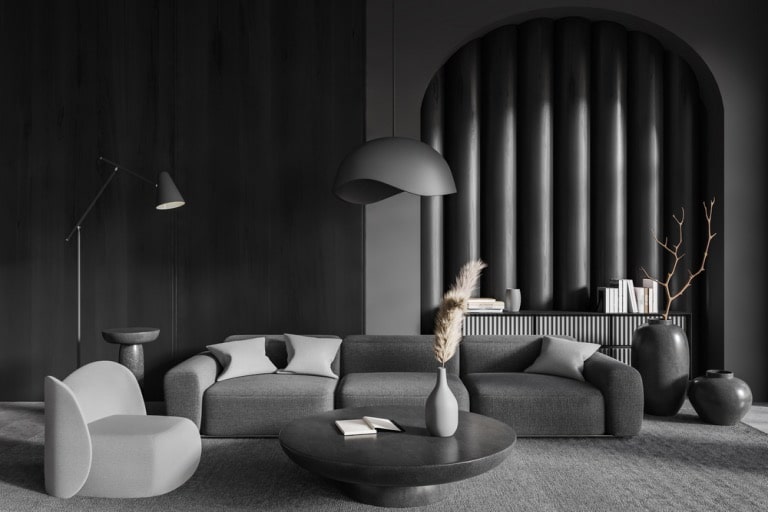
Luxury in interior design is evolving: no longer defined by excess or ostentation, today’s high-end interiors focus on elegance, craftsmanship, and premium materials. Italian design, renowned for its balance between tradition and innovation, plays a key role in shaping this new concept of luxury.
Rather than relying on elaborate ornamentation, modern high-end interiors are characterised by understated elegance and timeless appeal. The focus is on quality over quantity, with carefully selected furnishings, and expert craftsmanship shaping interiors that feel exclusive yet effortlessly harmonious.
The Shift From Excess to Refined Elegance
Luxury in interior design has evolved into a more sophisticated and intentional expression of style. While past trends emphasized elaborate decorations and lavish features, contemporary spaces prioritize harmony, proportion, and carefully selected elements.
Italian design has played a key role in this evolution, showing that true elegance lies in the balance between aesthetics and functionality. This change is especially noticeable in the use of natural materials, tailored designs, and precise detailing.
Modern luxury highlights textural contrasts, handcrafted finishes, and architectural purity to create rooms that feel both exclusive and inviting. Every piece of furniture or decorative element serves a purpose, contributing to an atmosphere of effortless refinement.
By embracing a more thoughtful and restrained approach, Italian design elevates luxury to a new level – one where the focus is on substance, authenticity, and a timeless sense of beauty.
The Art of Italian Craftsmanship in Luxury Interiors
A defining characteristic of Italian luxury design is the unmatched level of craftsmanship that goes into every detail. Unlike mass-produced furniture, high-end Italian interiors reflect a deep-rooted tradition of artisanal excellence, where each piece is the result of meticulous skill and refined techniques passed down through generations.
This attention to detail is reflected in custom-made furnishings, intricate woodwork, and precision in every finish. Whether it’s sculpted glass surfaces or finely crafted metal accents, the focus is on quality that stands the test of time. Italian artisans seamlessly blend traditional methods with innovations, ensuring that interiors achieve both visual appeal and lasting functionality.
Beyond aesthetics, craftsmanship is also central in personalisation. Exclusive environments often feature tailor-made elements designed around individual preferences, reinforcing the idea that true luxury lies in unique, thoughtfully crafted pieces that reflect the character of a space.
Innovative Materials: The True Expression of Modern Luxury
Luxury interiors are not just about aesthetics – they are a sensory experience shaped by the finest materials and cutting-edge advancements. Italian design has a long tradition of exploring new possibilities, merging heritage with contemporary techniques to enhance both the visual and tactile qualities of environments.
Materials define the atmosphere of a space. Elements such as glass, solid wood, and brushed metals add depth and character, while innovative surface treatments provide a contemporary edge.
Storage solutions, for example, have evolved beyond mere functionality, integrating elegant finishes and modular designs. In high-end interiors, modern bookcases seamlessly blend into the architecture, acting as both decorative elements and practical features that improve spatial harmony.
The combination of classic materials and forward-thinking applications allows rooms to remain elegant yet adaptable, guaranteeing a balance between sophistication and practicality.
Customization and Personalization
True luxury lies in the ability to create a space that feels uniquely tailored to the individual. Italian interior design embraces this philosophy by offering personalization at every level, from furniture design to spatial configurations. This approach guarantees that high-end rooms are not just aesthetically refined, but also deeply personal and functional.
Custom solutions allow for interiors that adapt to specific needs, whether through modular furniture, tailored finishes, or handcrafted details. Italian designers prioritize flexibility, ensuring that pieces are not just beautiful but also serve a purpose in enhancing everyday living.
The ability to customize materials, dimensions, and layouts gives homeowners the freedom to shape their environment according to their lifestyle, reinforcing the idea that exclusivity is about precision and thoughtful design rather than abundance.
A focus on personalization allows for a perfect balance between innovation and tradition, resulting in timeless spaces that embody both craftsmanship and contemporary sensibilities.
LAGO: a Contemporary Approach to Italian Luxury Interiors
LAGO has redefined modern luxury by combining refined aesthetics, innovation, and masterful craftsmanship. Since its founding in 1976, the brand has embraced a vision of design that prioritizes elegance and functionality, making it a benchmark in the world of high-end interiors. Every piece is crafted with a deep commitment to quality, ensuring that luxury is not just seen but experienced.
The history of LAGO is rooted in a craftsmanship tradition dating back to the late 19th century, when the first wooden furniture pieces were made. Over the years, the brand has managed to evolve while never compromising its identity. In 2006, under the leadership of the fourth generation, it began its international expansion and successfully established itself on the global stage.
LAGO is distinguished not only by its innovative approach to design but also by its bold communication and strong digital presence. The company embraces a constantly evolving vision, where culture and design become tools for social transformation.
Today, with more than 200 employees and a distribution network of over 500 points of sale across 20 countries, the brand continues its global development.
LAGO designs its creations with a focus on customization and modularity, allowing each space to reflect the needs and aspirations of its occupants. Far from being a mere aesthetic exercise, design becomes a language that connects individuals to their environment, promoting sustainable solutions that cater to contemporary lifestyles.
