
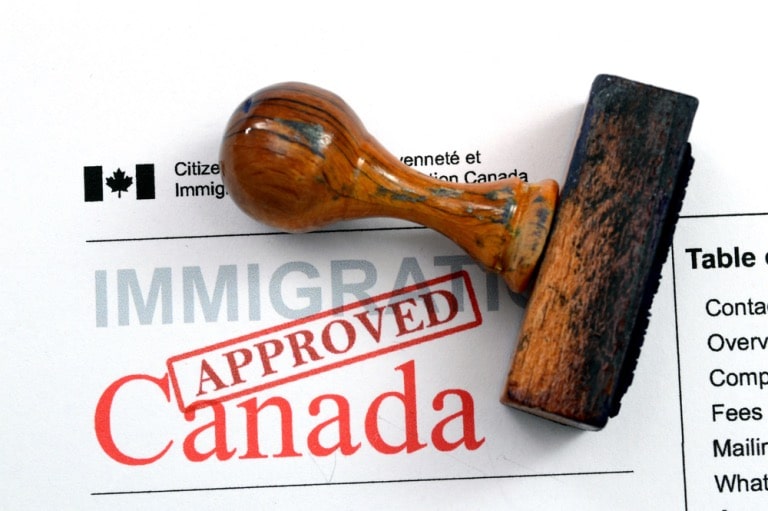
Sponsoring a family member for immigration in Canada provides one great avenue of being reunited with close family members and the chance to stay in Canada. Under the program of family sponsorship, one can sponsor his or her spouse or common-law or dependent children, parents, grandparents, and other relatives-but not every relative becomes permanent resident below certain conditions.
This includes the eligibility criteria, submission of the right forms, and most importantly, ensuring the person being sponsored would receive sufficient support once he or she arrives in Canada. This class of sponsorship allows the families a chance to get reunited and thus has been a major entry point into Canada.
Eligibility Criteria of Sponsors
To be a sponsor, one needs to be a citizen of Canada or a permanent resident of Canada. Furthermore, the candidate needs to have attained the age of majority, which is 18 years and must have lived in Canada. Anyway, if you are a citizen but residing outside Canada, you can still sponsor a family member; this would only be possible if your intention is to resettle in Canada when your relative becomes a permanent resident.
You must demonstrate that you can support the person you are sponsoring with sufficient financial resources to the extent that they will not depend on government assistance. The ability to sponsor will also be impaired in cases where there have been past defaults in financial support, such as failure to pay for a previous sponsorship.
Family Members You Are Eligible to Sponsor
Family sponsorship in Canada allows you to sponsor certain categories of family members. You are allowed to sponsor your spouse, common-law partner, or conjugal partner, provided you are able to prove the genuineness of your relationship. You can also sponsor dependent children, both biological and adopted.
This means applications for the Parent and Grandparent Sponsorship Program are lotteried in a selection lottery system created due to high demand. In other specific circumstances, orphaned relatives under 18 years or any other family member can be sponsored if no other eligible relatives are found.
The Sponsorship Agreement
Perhaps most importantly, a critical part of sponsorship families involves that between two parties, conventionally known as the sponsorship agreement. It is a legally binding agreement which the sponsor commits to with the Canadian government, where the said sponsor promises to provide the necessary funds for a family member in question.
This commitment period varies according to the nature of the relationship: sponsorship of a spouse or partner has a three-year support commitment period, while the same for parents or grandparents is 20 years. The agreement is an assurance that the person being sponsored will not become dependent on the government with regard to welfare or assistance of any kind while the agreement is in effect.
Overview of the Application Process
There are two applications involved in the process of sponsoring a family member: one for sponsorship and another for permanent residence. First, the IRCC should approve the application for sponsorship; the permanent residence application will then be processed further.
It is also to be kept in mind that all supporting documentation and proof of the family relationship will need to be in original form, such as a marriage certificate, birth certificate, etc. Missing documents or problems regarding immigration in proving the relationship will delay everything. This is where a Toronto immigration lawyer proves useful to make sure it all goes just right.
Sponsoring a Spouse or Partner
One of the more common types of family sponsorships is sponsoring a spouse or partner. The Government of Canada examines such applications quite closely to ensure the relationship is genuine and not entered into for immigration purposes. Proof of this may typically be supported by photographs, joint financial accounts, or shared responsibilities. Spouses can be sponsored whether they reside inside or outside Canada, and it may take several months for the whole process to be completed based on different situations.
The Importance of Supporting Documents
Good documentation is the backbone of any successful family sponsorship application. General documents needed are proof of relationship, income verification, and personal identification documents. Documents have to be translated into one of the two official languages if they are in neither English nor French.
Failure or incomplete documentation may also lead to extreme delay or rejection of the application, hence this is an important issue to be considered. Sponsors and applicants must also be conscious of possible additional documents for a given country of origin for the sponsored family member.
Post-Approval Obligations
The sponsorship and permanent residency applications of your family members have been approved, but it is not the end of your responsibility as their sponsor. You are bound to take financial responsibility for them in a specified period of the agreement of sponsorship so they would not depend on social assistance. Breach of these conditions on your part involves legal consequences, such as not allowing you to sponsor again or needing to pay back the government for the person whom you sponsored and who applied for social assistance.
Family immigration into Canada calls for an understanding of needs and procedures to be the rewarding process of reuniting and building successful families.
